Mascarpone: The Other White Cheese

Rich, buttery and sumptuous: Mascarpone cheese was made for summer. Whether used in a dessert, dip or spread, Mascarpone’s creamy white appearance and smooth, thick texture makes it a natural choice for recipes that call for sweet creamy cheese.

Mascarpone originated in the Lombardy region in Italy. It is perhaps best known for its starring role in the traditional Italian dessert, Tiramisu, combining Mascarpone with lady fingers soaked in espresso. But these days, the cheese can be found in a variety of applications, with two Wisconsin companies specializing in making it:

BelGioioso Cheese
In 1990, BelGioioso became the first American company to craft Mascarpone in the United States, and the company now offers three types for various applications. Its Classic Mascarpone is naturally light and blends well with other ingredients. Tiramisu Mascarpone is the company’s flavored version, mixed with real coffee and sugar, while Creme di Mascarpone is sweeter than the classic version. BelGioioso’s Classic Mascarpone won a Best in Class Gold Medal at the 2010 World Championship Cheese Contest.

Crave Brothers Farmstead Cheese
Fresh and sweeter than its original Italian inspiration, Crave Brothers’ Farmstead cheese is custom-made for desserts. Crafted on the Crave dairy farm, the family’s Mascarpone is sweet and dreamy, with a light, sweet, creamy taste. A multiple award-winner, Crave Brothers’ Mascarpone just won a Best of Class Blue Ribbon at the 2011 American Cheese Society, held August 6 in Montreal.

Earlier this month, I had the amazing fortune to judge the Crave Brothers Farmstead Cheese annual recipe contest at the Waterloo Farmer’s Market, and a dish – featuring Mascarpone, of course – took top honors. Created by Deb Dunstan of Deerfield, Wis., Summer Strawberry Delight was inspired by a friend and her fresh strawberry bread. Deb took that thought to a new level, and with carrot cake frosting in mind, added mascarpone to cake batter, reduced the sugar in half, and added chopped strawberries. The result is fantastic. Here’s the recipe:

SUMMER STRAWBERRY DELIGHT

Creamy Cheese Batter
8 oz. Crave Brothers Mascarpone Cheese at room temperature
¼ cup of white sugar
¼ cup fresh strawberries, finely chopped – or – unsweetened frozen berries, thawed, drained and mashed.

Cream mascarpone cheese and sugar together until smooth.  Stir in strawberries.  Set aside.

Cake Batter
1 ½ cups all purpose flour
1 cup white sugar
1 ½ teaspoons cinnamon
½ teaspoon baking soda
½ teaspoon salt
¾ cup vegetable oil
2 eggs
1 cup fresh strawberries, sliced – or – unsweetened frozen berries, thawed, drained and chopped

Mix flour, sugar, cinnamon, baking soda and salt in a mixing bowl. Add the oil, eggs and strawberries. Beat until the dry ingredients are just moist.

Pour into greased and floured 9″ round pan.

Spoon the creamy cheese over the top of the cake batter.  Gently swirl and fold the creamy cheese into the cake ensuring that it does not totally mix in but also gets to the bottom of the pan.

Bake at 350F for 55 – 60 minutes.  It is done when a toothpick comes out clean.  Serve with ice cream or when chilled, sprinkle with powdered sugar and dollop with whipped cream.

For additional recipes featuring Wisconsin Mascarpone, visit http://cravecheese.com/recipes.php and http://www.belgioioso.com/Mascarpone.htm. Enjoy!

So Many New Summer Cheeses, So Little Time

Somehow I get the feeling Wisconsin cheesemakers don’t take summer vacation. With all the new cheeses out on the market this season, it’s hard to keep up. Here are few new favorites worth trying before the summer is over:

Mediterranean Fontina, Sartori Cheese
Master Cheesemaker Mike Matucheski has hit another home run with this new creation, just now launch in national markets. It features the earthy flavors of garlic, thyme and olive oil, even giving off a little heat, courtesy of the Aleppo pepper. This beauty just won second place in its class at the 2011 Wisconsin State Fair Cheese Competition.

Ricotta Salata, BelGioioso Cheese
Known as The Italian Feta, Ricotta Salata starts as a milky ricotta. Salt is added to aide in moisture loss and the cheese is then hand scooped into cheesecloth and pressed into wheels. During the 60-day aging process, its texture becomes dry and crumbly, producing a wheel that is easy to slice, cube, crumble and shave. It’s perfect for topping hot pastas or cold salads. BelGioioso’s Ricotta Salata won a second place at the U.S. Championship Cheese Contest in March and is just now hitting retail shelves.

Quark, Cedar Grove Cheese
There’s never a dull moment when Master Cheesemaker Bob Wills is around. His latest addition to the Wisconsin cheese scene is German Style Quark, a fresh cheese that’s a cross between cream cheese and cottage cheese. Common in Europe, Quark is just now catching on in the United States. Try mixing fresh herbs for a spread or using it in a cheesecake. I’ve also had it mixed with dark chocolate and strawberries – yum! – courtesy of Cheesemaker Blair Johnson. Available in select Wisconsin specialty cheese stores. Call your cheesemonger and request it!

Evalon with Cumin or Fenugreek, LaClare Farms Specialties
U.S. Champion Cheesemaker Katie Hedrich has rolled out two new cheeses. Evalon, a semi-hard goat’s milk cheese, is now available with either a strip of cumin or fenugreek down the middle. Both cheeses are new to the market, but can be found in specialty cheese shops across the state. The fenugreek style just won a Blue Ribbon at the American Cheese Society in Montreal. Congrats, Katie!

2011 ACS Best in Show

It’s official: Rogue River Blue is the big cheese.

After a heart-warming and tear-jerking speech earlier in the day about his mentor and former Rogue Creamery owner Ig Vella (who sold the plant on a handshake), Rogue co-owner David Gremmels made the long walk to the podium tonight after the big bold blue that’s made the company famous was once again named Best in Show at the 2011 American Cheese Society competition. This is the second time Rogue River Blue has taken the honor, last winning in 2009.

Of 1,676 cheeses entered by 258 different companies across North America, three more cheeses took top honors. Earning Runner Up Best in Show were two cheeses that tied: Wisconsin’s very own Carr Valley Cheese, which won for Cave Aged Marisa, and Ontario’s Finica Food Specialties for its Lindsay Bandaged Cheddar. Fromergerie du Presbytere of Quebec took Second Runner Up Best in Show with its Louis d’Or.

The awards ceremony this year was particular festive, as a giant screen showing a live cam of winning cheesemakers receiving their ribbons was displayed at the front of the room. Several cheesemakers took the opportunity to smile and wave at the camera, including Wisconsin cheesemaker Marieke Penterman of Holland’s Family Cheese, (that’s her, pictured at right), who showed off her disco dance moves after sweeping the Flavor Added-Dutch Style category with First place Marieke Gouda Cumin, Second place Marieke Gouda Black Mustard and Third place Marieke Gouda Mustard Melange. (Of course, Marieke is still on a high after being named yesterday as the first woman Grand Master Cheesemaker at the 2011 Wisconsin State Fair. It’s days like this where she wishes she could be in two places at once)!

Another Wisconsin cheesemaker doing her own happy dance was Katie Hedrich of LaClare Farms Specialties (pictured at left). Of the three cheeses she entered, two won their classes. Earning Blue Ribbons were Evalon (also the 2011 U.S. Champion Cheese), and Evalon with Fenugreek. You go, girl.

And then of course there were the perennial favorites – Sid Cook of Carr Valley captured 11 awards in addition to his Runner Up Best in Show, BelGioioso Cheese wore a path in the carpet on their way to the stage to get all of their ribbons, and Sartori won so many awards that cheesemaker Mike Matucheski had to roll up his shirt to carry them all.

Here’s a look at all the 2011 ACS Blue Ribbon winners from Wisconsin:

  • Mascarpone, Crave Brothers Farmstead Cheese, Waterloo
  • Brick, Klondike Cheese, Monroe
  • Tomato & Basil Feta, Klondike Cheese, Monroe
  • Monterey Jack, Burnett Dairy Co-op, Grantsburg
  • Cocoa Cardona, Carr Valley Cheese, LaValle
  • Cave Aged Marisa, Carr Valley Cheese, LaValle 
  • Cave Aged Mellage, Carr Valley Cheese, LaValle 
  • Casa Bolo Mellage, Carr Valley Cheese, LaValle 
  • Marieke Gouda Cumin, Holland’s Family Cheese, Thorp
  • Marieke Gouda Smoked Cumin, Holland’s Family Cheese, Thorp
  • Little Boy Blue, Hook’s Cheese, Mineral Point
  • Gran Queso Reserve, Emmi Roth USA, Monroe
  • Sartori Parmesan, Sartori, Plymouth
  • Sartori Reserve Black Pepper BellaVitano, Sartoi, Plymouth
  • Fresh Mozzarella Thermoform, BelGioioso Cheese, Green Bay
  • Burrata, BelGioioso Cheese, Green Bay
  • Evalon, LaClare Farms Specialties, Chilton
  • Evalon with Fenugreek, LaClare Farms Specialties, Chilton
  • Driftless-Cranberry, Hidden Springs Creamery, Westby
  • Farmstead Feta, Hidden Springs Creamery, Westby
  • Pleasant Ridge Reserve, Uplands Cheese, Dodgeville

In addition to our many awards, Wisconsin was also honored earlier in the day, as the ACS inducted a class of pioneer goat cheesemakers into its Academy of Cheese. Taking home a giant crystal statue of cheese was Anne Topham of Fantome Farm (pictured third from left). Anne’s been selling her goat cheeses at the Dane County Farmer’s Market in Madison for more than 20 years and it was nice to see her in Montreal getting the recognition she deserves.

Congratulations to all the ACS winning cheesemakers! I’m looking to celebrating with you all tomorrow night and eating your cheeses at the Festival of Cheese.

Meet the Cheesemaker in Montreal

Thousands of people trek to the American Cheese Society conference every year to attend the Festival of Cheese, by far the most popular event of the annual shindig. And while I definitely look forward to trying not to get sick by eating 1,600 cheeses, my favorite ACS event instead happened tonight in a much smaller room, attended by far fewer people.

It’s a little thing called Meet the Cheesemaker.

I don’t know why, but I find something absolutely magical in walking around a room, eating cheese from dozens of different companies, and getting to shake hands and talk shop with the man or woman who makes each cheese. Every year, I especially try to seek out new and upcoming cheeses, and this year did not disappoint. A few discoveries of the evening:

Mountina, Vintage Cheese Company, Montana

This washed rind cheese is made by cheesemaker brothers Dwayne and Darryl Heap, both of whom attended tonight’s Meet the Cheesemaker. The pair market their cheese as “an Alpine cheese from the mountains of … Montana.”

The pair have been been making thier Mountina cheese since 2009, but just released a new version called Mocha Mountina, which is washed with coffee and cocoa beans. Surprisingly, the coffee compliments  the natural nutty flavor of the cheese.

The Heaps’ father, a cheesemaker by trade, came up with the coffee and cocoa bean wash recipe before passing last year. Larry Brog, of the famed Swiss cheesemaking family of Star Valley, Wyoming, helped the Heaps perfect the recipe and method. And to tie it all together, Larry’s uncle, Paul, a Swiss immigrant and cheesemaker, trained Dwayne and Darryl’s grandfather to make cheese. It’s a long and winding story, but the cheese is totally worth it.

Shepherd’s Basket, Valley Shepherd Cheese, New Jersey
Eran and Debra Wajswol host between 20,000 and 30,000 tourists at their farm every year. Built as a family destination, agri-tourism site, Valley Shepherd Cheese is making some pretty good cheeses from the milk of their 600 sheep, 30 goats and 20 cows. My favorite is Shepherd’s Basket, a Manchego-style, raw sheep’s milk cheese made in a five-pound wheel with basket-like weave rind.

I’d love to show you a picture of this beauty, but when I asked my hubby to get a shot of it, he instead took a close-up of a cotton-ball sheep with googly eyes sitting on the Valley Shepherd Cheese table. Sigh. So you’ll just have to take my word for it – this cheese is a keeper.


Le Sein d’Helene, La Moutonniere, Quebec, Canada

This cheese was quite popular with the fellows at the Meet the Cheesemaker event, as it is shaped like and named for a woman’s breast. Cheesemaker Lucille Giraux said she created the cheese to represent the mountains of where she lives, and then thought of the name afterward, in honor of her village, Ste. Helene-de Chester in Quebec.

Made from a mixture of sheep and Jersey cow milk, Le Sein d’Helene has a natural rind and is aged between two and four months. It’s sweet and buttery, which makes it the perfect table cheese. If only I could get this in the United States. Sigh.

Espresso Bellavitano, Sartori, Plymouth, Wisconsin
Master Cheesemaker Mike Matucheski has done it again. The wizard behind Sartori’s line of fruity BellaVitano cheeses, the company’s newest offering is Espresso BellaVitano, rubbed with oil and espresso beans and then cured between two and six months, allowing the espresso flavor to work its way through the rind and into the heart of the cheese.

While in Montreal this week, I learned something new about BellaVitano. The cheese was actually inspired by a cheesemaking trip to Italy, where the Sartori cheesemakers tasted Piave, an intense, full-bodied cheese, reminiscent of Parmigiano Reggiano. The team returned to Wisconsin with a mission to make their own style of the same cheese, and voila … BellaVitano was born. In the process, they created an American Original beloved by many.

Thanks to all the cheesemakers to attended tonight’s event – it was awesome to meet each and every one of you!

O, Canada!

Update: Good news. I wrestled and won my bout with inferior Canadian wifi. The result: a successful upload of the pure joy that is “Duck in a Can.” 

I am embarrassed to admit that before visiting Montreal this week for the American Cheese Society’s annual conference, what little knowledge of Canada I possessed stemmed from watching the 2010 Winter Olympics on television.

From that vast data bank of knowledge, two particular items are seared forever into my memory: 1) the closing ceremonies where giant inflatable beavers were pushed around on the ice, accompanied by a giant inflatable moose (yes, really – watch the video), and 2) the annoyingly catchy “O Canada” national anthem sang at what seemed like every freakin’ medal ceremony, and of which I hummed incessantly for weeks afterward.

So you can imagine my surprise after spending just two days in the beautiful city of Montreal to discover Canada is WAY more than oversized inflatable rodents and addictive show tunes. It’s also home to the largest population of restaurants outside France specializing in serving foods fried in duck fat.

I discovered this little known fact after spending an amazing day touring and tasting our way through the city’s cheese shops – including Fromagerie Maitre Affineur Maitre Corbeau (I’d highly recommend the Delice des Appalaches – a Canadian stinky cheese washed with ice cider), and La Fromagerie Hamel (I somehow talked the French-speaking cheesemonger into letting me taste Oka, the famed Quebecian cheese) – as well as visiting a lovely little goat cheesrie in Mercier run by Caroline Tardif, named Fromagerie Ruban Bleu. (Below, that’s Alma Avalos of the Pasta Shop in California, getting some lovin’ from a friendly goat at Tardif’s farm).

After eating a total of 12 different cheeses, a whopping lunch of smoked brisket, duck-fat fried french fries, cole slaw and a pickle speared with a miniature Canadian flag on a toothpick. I was completely and utterly not, in the very least, at all hungry.

This is why I immediately joined a group of friends, caught a cab, and went to dinner at Au Pied de Cochon in the Latin Quarter of Montreal. With nary a Latin restaurant in sight (the area gets its name from the Latin Quarter of Paris, home to a number of higher education establishments), our group of six decided to order several different dishes and share each.

I decided to maneuver around the Pig’s Head for Two and Tarragon Bison Tongue, instead ordering the Canard en Conserve, or “Duck in a Can.” This little gem of a dish, and I use “little” only in a figurative sense, consists of a duck breast, a half pound of foie gras, a healthy dose of balsamic demi-glaze, roasted garlic, and two branches of thyme. All of this is boiled in a can for 30 minutes and then opened and served at the table, spilling over a plate of a buttered crouton topped with mashed potatoes.

Yes, really. I am not making this up. My hubby took a video of the process and if I ever figure out how to successfully upload it to my You Tube channel while here in Canada, I’ll send you all a link. (It ends with a charming shot of me holding the can and giving a thumbs up).

Long story short, I of course ate my giant plate of steaming hot duck fat, along with Steak Frites fried in duck fat, poutine topped with fois gras, a giant rib bone better suited for dinner with the Flintstones, Foie Gras ‘Tout Nu’, as well as a smattering of dishes all shared around the table, including a beet and goat cheese salad, tomato tart, and apple and blue cheese dish.

Oh, plus two strawberry daiquiris.

With the conference tours finished, attendees now look forward to two full days of educational and cheese tasting seminars at the Palais des congrès de Montréal, with more evening receptions and dinners no doubt featuring dishes fried in duck fat.  Here’s hoping they serve the occasional salad at lunch. At this rate, I may not fit into the airplane seat on the way home. Damn, I love Canada.

Cheese Geeks Unite!

It’s cheese week, baby! Yep, this is the one week of the year where I seem normal. That’s because starting today, I am amazingly surrounded by more than a thousand cheese geeks, all of whom this year are trekking from across North America and descending upon Montreal in Quebec, Canada for the American Cheese Society’s 28th Annual Conference & Competition.

Held in a different city every year, this is the first time the conference has been held in Canada. However, no matter the location, the faithful few gather each year to talk shop and witness the shock and awe of more than 1,650 artisan, farmstead, and specialty cheeses from Canada, U.S.A., and Mexico.

Today and tomorrow, the cheeses are being sorted and judged, and by the end of the week, they will all be sliced and served, giving attendees a rare chance to get an up-close-and-personal look, sniff and taste at thousands of artisanal cheeses, most not available on a national retail level, as they are crafted by small, farmstead and dairy artisans and sold locally.

My glorious week of cheese eating actually started a bit early this evening, as dinner in downtown Montreal featured the famous local dish of Poutine. What is Poutine, you ask? Oh, let me tell you. It’s a big bowl of home-made, hand-cut French fries, smothered in rich and smooth beef gravy like your mother used to make, topped by a glorious smattering of fresh cheese curds. Yes, cue the angel chorus. This heavenly dish is then placed in front of you in all its glory, beckoning you to ingest all of its 13,000 calories.

Damn I love Canada. Who doesn’t love a country that specializes in a dish combining the three basic food groups – potatoes, gravy and cheese? If the rest of the week goes as well as tonight, this may be the best ACS conference ever.

Stay tuned all week, as I’ll be blogging about cheese tours, cheese seminars and of course, the cheese awards ceremony where we’ll learn who takes home the coveted Best in Show trophy. For up-to-the-second news, follow all of us cheese geeks on Twitter by searching the #Cheese Society11 hashtag.  Cheese geeks unite!

Green Cheese

As I was sitting in a room filled with bespectacled scholars, mad-haired scientists and well-dressed industry experts yesterday, it occurred to me that the more I learn about cheese, the less I really know.

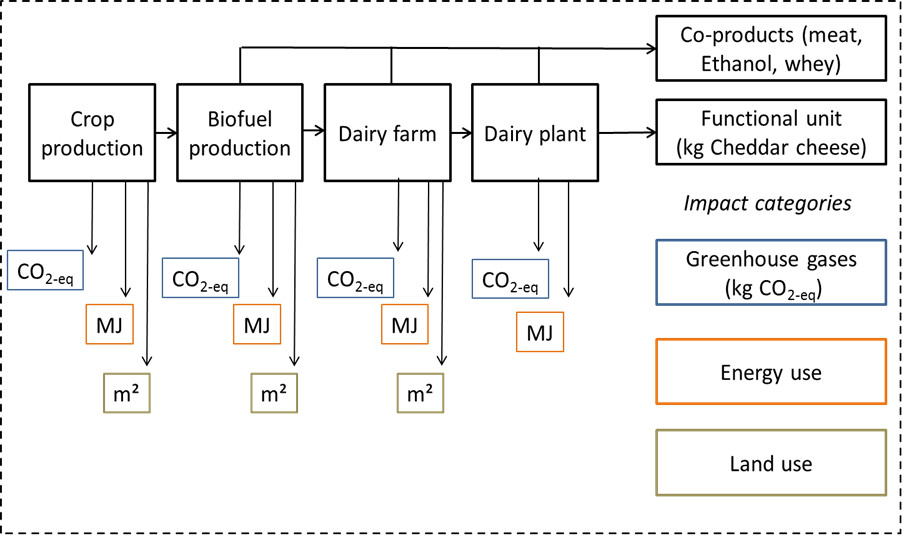
Case in point: about 50 people gathered at the Wisconsin Department of Agriculture to get an update on The Green Cheese Project, which according to its website, is a “a partial LCA of integrated dairy and bio-fuels production systems.”

Yeah, I have no idea what that actually means, so I Googled it and found that for the past couple of years, a group of progressive dairy farmers, state agencies, and faculty at UW-Madison have been working together to quantify energy intensity, greenhouse gas emissions, and the overall environmental impact of dairy and bio-fuel production in Wisconsin. They’re calling their work the Green Cheese Project.

Cool.

And, while I spent most of yesterday’s meeting trying to maintain consciousness and follow acronym-laden lingo, I did glean these facts, which I think are pretty neat:

  • World dairy contributes 4 percent of all man-made greenhouse gases.
  • The carbon footprint of a gallon of milk is 17.6 pounds.
  • The carbon footprint of a pound of cheese is 10 times higher, because it takes 10 pounds of milk to make one pound of cheese.
  • Processing whey, the byproduct of making cheese, has a much larger footprint than just making cheese.

Furthermore, while I have only a vague idea what the above chart represents (there’s a reason I have a Bachelor of Arts, vs a Bachelor of Science), I’m sure someone reading this blog will think it’s awesome. According to Professor Douglas J. Reinemann, it shows the main processes within the life cycle of one kg of Cheddar cheese.

And, while I admit to not understanding nearly as much as I should have from yesterday’s session, it did result in meeting some really cool people who provided more information about the sustainability of dairy. Sarah Gilbert, who works with the American Jersey Cattle Association, gave me a super cool handout on a study done on Jersey cow herd performance, taken from nearly 2 million dairy cows in more than 13,000 herds in 45 states.

The study concluded that per unit of cheese, the Jersey carbon footprint is 20 percent less than Holsteins, as Jersey cows weigh less and produce milk that is more nutrient-dense. Jersey cows also drink only 68 percent as much water as Holsteins, and because they are smaller, emit less methane (cow burps and farts), which unfortunately, contribute to greenhouse gases.

And then there was this study, handed to me by Dennis Presser at DATCP, which reports that computer simulation studies conducted by scientists at the U.S. Department of Agriculture suggest dairy cows raised year-round on pasture provide significantly greater environmental benefits than herds raised in high-production confinement operations.


Hmmm … studying cows on computers, that had to be fun. The study concluded that compared to confinement systems, dairy cows kept outdoors all year had 30 percent lower levels of ammonia emissions, and that a well-managed dairy herd kept outdoors year-round left a carbon footprint that was 6 percent smaller than that of a high-production dairy herd kept in barns. 


In addition, the study found when fields formerly used for feed crops were converted to perennial grasslands for grazing, carbon sequestration levels climbed from zero to as high as 3,400 pounds per acre every year.  Which, is great, providing you live somewhere that doesn’t experience a little something called winter.


All in all, the Green Cheese Project makes me wish I had paid more attention to subjects that ended in “ology” in school so I could understand it better. And if, unlike me, you understood half of what I just wrote about, then follow the team’s Green Cheese Project progress and check back for conclusions and publications coming soon.

The State of American Cheese

The American Cheese Society recently completed the first-ever survey of artisan, farmstead and specialty cheesemakers in the U.S. and Canada, identifying and contacting 851 North American cheesemakers. About a third, 324, participated. While the full report has not yet been released, Christine Hyatt, president of the ACS, published some intriguing numbers from the study in a July story for the Oregon Wine Press.
For example, the study shows in the last 10 years, 61 percent of all American cheesemakers started their operations. Compare this to only 9 percent having started prior to 1980, and you’ll see what all the fuss has been about in American artisan cheese in the last decade.
While I don’t know how many Wisconsin artisan, farmstead and specialty cheesemakers participated in the ACS study, I can tell you that the ACS survey data mirrors what’s happening in Wisconsin. In 2003, when I first started working in the artisan cheese community, we had six farmstead cheesemakers. Today, we have 26 farmstead cheesemakers and a half dozen more farmstead milk bottlers, ice cream makers and yogurt producers. If I were any good at math, I could tell you what percentage growth that was, but as it stands, all I know is that it’s impressive.
According to the ACS data, the ’80s and ’90s were marked by slow growth with an average of just under four new cheesemakers starting up each year between 1981 and 1999. Fast forward to the 2000s, when an average of 19 new cheesemakers started up each year. The ACS reports that the years 2005 and 2010 were tied for the highest number of startups, with 23 each year.
In 2005, I was still working as a spokesperson at the Wisconsin Department of Agriculture. I’ve kept my press releases from those days and went through them just for fun. Here were a few of the headlines I wrote for the state of Wisconsin that year:
  • Grants announced to help Wisconsin processors expand specialty cheese and dairy
  • More Wisconsin dairy producers and processors modernizing, reinvesting in operations
  • New website offers resources for Wisconsin farmstead dairy producers, consumers, buyers
  • Register now to attend farmstead milk and ice cream field day
  • Specialty dairy revolution in Wisconsin: a conversation with Dan Carter
  • WI cheesemakers take center stage at New York’s Artisanal Cheese Center
  • Wisconsin takes top honors at American Cheese Society Competition
Those were heady times — Wisconsin cheesemakers and dairy farmers were modernizing, expanding and launching new products almost every month. I had a hard time keeping up with the news, and because the Dept of Ag obviously wasn’t going to report on every little thing happening in the industry, I started this Cheese Underground blog in 2006, writing anonymously for the first year as a state employee, until some dude named Kevin ratted me out in the Chicago Reader. Shortly thereafter, I left the Dept of Ag and started my own business, working full-time to share the gospel of Wisconsin artisan cheese.
And what a story it’s been. From cows to goats to sheep, American artisanal cheese is coming into its own. According to the ACS study, cow’s milk is still used the most for specialty cheeses, by 64 percent of processors. But goat milk has come a long way – with 50 percent of the study’s respondents using it to make cheese today, a dramatic shift from even 20 years ago, when Fantome Farm’s Anne Topham had to give away goat cheese at the farmer’s market just to get people to try it. Meanwhile, sheep’s milk is used by 15 percent of cheesemakers, the survey results show.
Style-wise, the ACS reports that 77 percent of cheesemakers craft aged cheeses and 63 percent produce fresh product. Ripened and semi-soft are made by about 50 percent, with blue cheese being the most popular offering by 30 percent of cheesemakers. More than half craft cheese with raw milk and 34 percent produce exclusively raw milk cheeses.
Cheesemakers also run very small businesses. Half of all operations responding to the ACS survey have three or fewer employees. Production is also on the low end, with 44 percent of cheesemakers crafting less than 10,000 pounds of cheese a year. The majority sell direct to retailers and restaurants, with 68 percent selling at farmer’s markets, which have also seen a dramatic rise from 2,863 in 2000 to 6,232 markets in 2010.
Christine says ACS staff is working hard to get the full report ready to be released in time for the American Cheese Society’s annual conference in Montreal, coming up August 2 – 6. I’m looking forward to attending the conference, and reporting more about the study from there. 

    Door County Dreamin’ at Schoolhouse Artisan Cheese Shop

    In the summer, California may have, well, California, but in Wisconsin, we have Door County. No bugs, no McDonalds, and no high-rise hotels. Just mom-‘n-pop restaurants with goats on the roof, cute shops and old-fashioned, 24-room motels snuggled into wooded hillsides. And this month, I got to visit this magical little place for the first time.

    So I’m not sure how this happened, but it seems that I’ve been to 36 of the 50 states and six different countries on three continents, but I’ve never been to Door County. I’ve come to the conclusion that’s because they never had a cheese shop for me to visit.

    Until now.

    Entrepreneurs extraordinaire Michael and Janice Thomas opened The Schoolhouse Artisan Cheese Shop in Egg Harbor, Door County (located on the “left-hand thumb” of Wisconsin) on May 25. A cut-to-order store selling ONLY Wisconsin artisan cheeses, the shop is an amazing spotlight for Wisconsin cheesemakers.

    In addition to the usual rock star cheeses such as Pleasant Ridge Reserve and Bleu Mont Bandaged Cheddar, the Thomases have managed to talk several up-and-comers into selling cheese nearly exclusively at their store. An example is Union Star’s St. Jeanne, crafted by young Jon Metzig, who named the cheese after his grandmother, and fashioned it after an Irish cheese that he studied two years ago on a 6-week cheesemaking trek across Europe that became the “So You Want to be a Cheesemaker” blog.

    The Schoolhouse Artisan Cheese Shop also makes to order and sells a handful of artisan sandwiches on fresh, crusty bread (I’d highly recommend the sandwich pictured here, the “Wisconsin’s Best” – Nueske’s applewood smoked ham, Emmi Roth Grand Cru Gruyere, mayo, fig and citrus chutney and crisp romaine) and is one of the only retail outlets that I know of selling Kelley Country Creamery ice cream.

    With eight employees, including shop manager Kathy McCarthy (the daughter and granddaughter of Wisconsin cheesemakers), Schoolhouse Artisan Cheese Shop is the latest brainchild of an energetic couple who have called Door County home since 2004, when they opened the Savory Spoon Cooking School in their renovated, 1847 farm house that was once the historic Olson Dairy.

    The couple ran the cooking school out of their home (pictured at left) the first two years as an experiment to see if people would be willing to pay to learn how to cook. “We figured if it worked, we’d outgrow the space. If not, we’d end up with the coolest kitchen in Door County,” says Michael. The school hit a home run, and two years later, moved into Ellison Bay’s renovated school house/old post office, where it’s been ever since.

    Every June through October, Janice opens up the The Savory Spoon Cooking School – a member of the International Association of Culinary Professionals – for nightly classes on Thursday, Friday and Saturday. However, on select Tuesdays throughout the summer, the pair host a series of “Artisan Cheese Tastings” where a Wisconsin cheesemaker is a guest of honor. On July 12, Andy Hatch from Uplands Cheese will lead a class, with Sid Cook of Carr Valley following on July 19.

    Other cheesemakers, including Katie Hedrich of LaClare Farm; Felix Thalhammer, Capri Cheesery; Chris Roelli, Roelli Cheese; Marieke Penterman, Holland’s Family Cheese; Diana Murphy, Dreamfar; Bob Wills, Cedar Grove Cheese; Bruce Workman, Edelweiss Creamery; and Affineur Jenifer Brozak will round out the summer schedule — for a complete listing of all classes, click here.

    Both the cooking school and the artisan cheese shop provide a unique exposure opportunity for Wisconsin artisan cheeses, as most attendees and shoppers are visitors from Chicago and the Twin Cities. “People discover amazing Wisconsin artisan cheeses here, and then remember them and seek them out when they get home,” Michael says (pictured above). “We have a unique opportunity to spotlight Wisconsin cheese to a growing market.”

    Thanks to Michael and Janice Thomas, Wisconsin artisan cheeses will continue to reach an ever-growing audience. I can’t wait to see what they dream up next.

    Photo credits to Uriah Carpenter.

    Cheddar Brain Trust Gathers at Roelli Cheese

    Above: Vat Captain John Jaeggi, far left, of the Center for Dairy Research talks with  Wisconsin cheesemakers, from left to right: Jerry Hook, Hook’s Cheese; Andy Hatch, Uplands Cheese; Kerry Henning, Henning’s Cheese; and Gary Grossen, Babcock Cheese. More than 20 Wisconsin cheesemakers gathered at Roelli Cheese on June 21 for the first-ever Cheddar Round Table, an educational cheesemaking and networking day.

    So if I were still a journalist and had to write the lead for a news article about my day yesterday, it would go something like this:

    “A group of Wisconsin cheesemakers boasting a total of more than 350 years of experience gathered at Roelli Cheese in Shullsburg yesterday to compare techniques and further their education of starter cultures in the art of cheddar cheese making.”

    However, Master Cheesemaker Bob Wills, who attended the first-ever “U.S. Cheddar Round Table” – the awesome brainchild of Cheesemaker Chris Roelli and John Jaeggi at the Center for Dairy Research – no doubt summed it up WAY better in this comment he left on my Wisconsin Cheese Originals Facebook page:

    “This was a great event. A bevy of cheese dweebs plying their craft and learning about culture. A well placed tornado would have obliterated our industry. We may need to have designated non-attendees in the future.”

    Ha! Yes, despite the threat of severe weather that was supposed to include tornadoes, hail and flash-flood-inducing thunderstorms, the sun shone down on Roelli Cheese yesterday, staying sunny and 85 – or if you were in the cheese plant, a balmy 105 plus 100 percent humidity. I mention this, because while cheesemakers are used to working in a sauna for a living (it’s why they always look so young), I instead spent the day sweating profusely and listening intently to conversations revolving around alien words such as “Lactococcus lactis” and  “Lactobacillus brevis”.

    And while I, a less-than-novice cheesemaker could not always keep up with the conversation (I nodded and smiled a lot), I didn’t have to be a cheese genius to see that the cheesemakers in attendance were having the time of their life.

    While John Jaeggi and Chris Roelli served as “vat captains” for two different vats of cheddar cheese, 20 different cheesemakers from a dozen different companies – ranging from some of the smallest plants to some of the biggest companies in the country – stood alongside, taking turns stirring, cutting, draining, and milling curd. In between, they talked about everything from what starter cultures and rennet they used, to comparing notes on make techniques and aging styles. Mixed in with the crowd were a few distributors, culture house experts, and cheese retailers including Gordon Edgar, of Rainbow Cheese Cooperative in San Francisco and Ken Montelone of Fromagination in Madison.

    “This is a way to talk about what we’re all doing and continue to elevate our industry,” John Jaeggi told the group as they waited for the starter cultures to start their magic. Chris Roelli added that while cheesemakers should not feel obligated to “give away their secrets,” the day was an opportune time to share information for the betterment of all. “Today, my house is your house,” he said.

    After about five hours of morning cheesemaking and networking, the group took a break to head upstairs to the cheese plant living quarters, where Chef Sara Hill prepared an amazing lunch of ribeye steak sandwiches, 4-cheese mac ‘n cheese, asparagus and green beans with Dunbarton Blue, and an awesome caprese salad. Then, an afternoon session of workshops started, with industry experts giving educational talks on starter cultures, cheesemaking techniques, and the latest updates on food safety mandates.

    Perhaps aided by a cooler full of New Glarus Spotted Cow on ice, cheesemakers openly shared information and ideas all day, with many making mental notes of what worked and what didn’t. The afternoon session ended with a full-blown cheese tasting, as almost all of the makers brought along cheese to share. By the end of the day, the group was already planning the next session to be held at a different cheese factory next year. Can’t wait!

    Above: a group of 25 cheesemakers, retailers, distributors and industry experts gathered at Roelli Cheese June 21 for what  many hope to be the first of a series of annual travelling educational cheesemaking days in Wisconsin.