Landmark Creamery: Cheese With Heart

Headshot1 03.2012

Five years ago, Anna Landmark sent me a letter, applying for a $2,500 Beginning Cheesemaker Scholarship through my organization, Wisconsin Cheese Originals. Dated January 29, 2012, she thanked me for considering her application, which listed her current position as a policy research director for a non-profit advocacy organization, along with past jobs in communications consulting, political campaign management and community organization.

I thought to myself: why on earth does this woman want to be a cheesemaker?

And then I turned the page. It read:

“My first recollection of eating cheese is at my grandparent’s dairy farm in Mount Horeb. They always had a large block of Swiss cheese sitting under a glass dome on the kitchen table. It would be brought out for breakfast in the morning and generally left on the table until the end of the day when it was wrapped up and put into the refrigerator. My grandfather was a stout Swiss farmer, his grandfather one of the original settlers of New Glarus, and milk, cheese and butter were staples. Swiss cheese with breakfast, with dinner, and with supper. Sometimes aged and sharp as can be, sometimes Baby with a mild bit and perfect elasticity. I loved it all.”

Heart. The girl had heart. Her application would go on to say she had started taking cheesemaking courses at UW-Madison, that she and her husband had bought a small farm near Albany, and that her grandfather was enjoying watching her return to the cheese world. But the sentence that sealed the deal was: “My grandfather is still skeptical anyone on a small scale can really make a living doing it. But I want to find out: can I build a successful business making sheep milk cheeses?”

Needless to say, Anna Landmark won that year’s scholarship, went on to earn her cheesemaker’s license, and today owns and operates Landmark Creamery with business partner Anna Thomas Bates. She crafts seasonal sheep, cow and mixed milk cheeses, renting space at Cedar Grove in Plain and Thuli Family Creamery in Darlington. At both the 2017 and 2015 U.S. Championship Cheese Contests, her fresh sheep’s milk cheese, Petit Nuage, won a Gold Medal, and she continually wins awards for her cheeses each year at the American Cheese Society competition.

Today, readers of Cheese Underground, you have a chance to help the dynamic Anna duo complete their dreams. That’s because Landmark Creamery is nearing the end of a Kickstarter campaign, where it is seeking $25,000 in seed money to build a cheese aging space and to purchase more efficient equipment, allowing the Annas to create new cheeses and buy more milk from Wisconsin family farms. With just five days to go, they are only $4,000 short of their goal.

And, while the past five years have witnessed the birth and early success of Landmark Creamery, with your help, dear readers, it can go even further. Here is Anna’s statement from 2012, describing her business 10 years in the future:

“In 2022, I hope to have nine years of making and selling sheep milk cheeses under my belt, and to be anticipating enrolling in the UW’s Master Cheese Making program. My goal is to have my own cheese plant, growing to produce 100,000 pounds of cheese per year, with distribution regionally and to the elite markets on the coasts. I feel so inspired when making cheese. I hope my business will be a credit to the dairy industry in Wisconsin, and that my cheeses will be delicious and unique enough to become Wisconsin Originals.”

Mission accomplished, my dear. Now let’s help you write the next chapter. Your grandpa would be proud.

Donate here.

The Summer of the Year I Turned 45

My mother got sick the summer she turned 45. A cigarette smoker since age 16, she stopped smoking that spring because she was already having trouble breathing. So at age 13, I inherited her job of driving the hay baler that summer, listening hard to understand the shouted directions of how to navigate corners and contours from my father standing on the wagon behind me. He stacked the small square bales chugging out of the chute one by one, grabbing each with a hook in his right hand and throwing them above his head with his left, until a load of almost 100 bales were stacked to withstand the bumpy trek back to the barn by the hired man.

My mother never got better. She was diagnosed with asthma, a condition that afflicts many people and a word that I had heard before. So I never really worried. That fall, I stopped taking the morning bus to school and took over my mother’s chores on the farm, taking a quick shower when we were done with the cows, curling my hair as fast as I could in the mirror over the sink upstairs, and then having dad drop me off at school. I grew up in farm country, so it shouldn’t have been embarrassing to be dropped off at school in an old farm truck, but when you’re a 13-year-old girl, everything is embarrassing. I am ashamed to say I worried more about the look of that farm truck than I did the health of my mother.

My mother died the summer she turned 53. The eight years between diagnosis and the grave were not pretty. She became confined to the four walls of the old farm house’s living room, filled with the whir of machines that helped her breathe. By the time I finished high school, Mom wasn’t getting better. So Dad made me a deal that if I turned down the scholarship to the journalism school I’d been offered, and instead commuted from home to the local college, helped him farm and take care of mom, he’d pay my tuition. So I did. And I am ashamed to say I resented that decision because I worried more about missing the full college experience than I did the health of my mother. Her asthma won during the summer between my junior and senior year of college. The next year I moved to Idaho to become a news reporter. The year after that, my dad remarried. And life marched on.

This is the year I turn 45. And summer will soon be upon us. I was 21 when my mother died. Sitting in the church pew next to my father during her funeral, I counted in my head how many years there were between ages 21 and 45. I’ve never been good at doing math in my head, which has always frustrated my father, a math genius, to no end. I suspect that’s why he taught me how to play cribbage when I was six years old: he figured making 15’s and 31’s and counting cards would help. It didn’t. To this day, I have to find a pen and paper or a calculator to do even simple addition or subtraction. So at age 21, sitting in that church, I kept myself from crying by trying to figure the math of how many years I had left before I got sick like she did. And I’ve been on a dead run ever since.

During the past 24 years, I’ve been described several ways, the nicest perhaps being “pushy,” the not-no-nicest starting with a “b” and ending with “itchy.” One boss described me as a snowplow. Another told me I was like a bull in a china shop. When my daughter was young, she would choose the jugs of milk at the store by which Sassy Cow Creamery “cow card” they carried. You can imagine her delight the day she found one that read: “Darlene: her pushy personality always gets her to the front of the herd.” She immediately removed it from the jug, thrust it at me, and said, “This cow is just like you, Mom!” It’s been on our fridge ever since.

For the past 24 years, I’ve lived my life in anticipation of this summer, trying to get as much accomplished as possible, traveling to as many places I can, and earnestly raising my daughter to adulthood, because the most significant woman in my life got sick when she was 45 years old. I’m in good health. I’ve never smoked. I’ve never found a brand of alcohol I enjoy, and I seem to be one of the few people who’s never tried drugs. There’s no doubt that I need to exercise more, and I probably drink too much coffee. But I’m doing fine. No life-threatening diagnoses so far.

That’s why a Friday afternoon two weeks ago meant so much to me. My husband and I took my dad and stepmom (who after 22 years in my life, I’ve started introducing as “mom”) to Baumgartner’s in Monroe for Limburger sandwiches and a game of Euchre. A group of Green County cheesemakers walked in and bought each other a beer. Several came over to say hello, so I introduced them to my parents. And then something amazing happened.

One of the cheesemakers, who knows my personality, and graciously chooses to overlook the “itchy” parts, shook my father’s hand and told him: “your daughter is changing the world.” I nearly broke down in tears. Is there any bigger compliment from a colleague? I don’t know if my father heard him, because the tavern was full, his hearing aid wasn’t working properly, and we would soon leave to find a quieter place. But I heard him. And it made all the difference. The summer that I turn 45 will come and go and I will keep on keeping on. I know I’ve got another 45 years in me.

Got (too much) Milk? As Wisconsin Dairy Gets Bigger, Progress Comes With a Price

When this week’s news hit that Grassland Dairy in north-central Wisconsin was ending milk contracts with between 65 to 75 Wisconsin dairy farmers, my first thought was: this is the beginning of the squeeze on medium-sized, Wisconsin-owned processing plants. Sure enough, news soon leaked out that nearby Nasonville Dairy in Marshfield, had also sent letters to about 20 area farmers on March 17, informing them their dairies would be dropped from pick-up because that cheese factory had recently lost a cheese contract and no longer needed their milk.

Keep in mind, these are not small factories. They are good-sized facilities employing hundreds of people. Grassland processes more than 3 million pounds of butter, cream cheese and milk powder a year, while Nasonville makes more 2 million pounds of Cheddar, Monterey Jack, Asiago, Brick, Muenster, Hispanic styles, Parmesan, Romano and Provolone at two different state-of-the-art facilities.

While Grassland’s predicament can be blamed on Canada (our neighbor to the north just implemented a new milk pricing structure, making it more cost efficient for Canadian processors to purchase milk from their own dairy farmers), the action taken by Nasonville, and I fear more Wisconsin-owned factories in the immediate future, is troubling.

To put it simply, big Wisconsin cheese factories that are not locally owned (more on this shortly) can and do purchase out-of-state milk cheaper by the semi-tanker than they can from the 10 small local dairy farms down the road. With a glut of milk in the upper Midwest, it’s a buyer’s market, and many big factories take advantage of cost differences by bringing in cheap milk from afar.

It wasn’t always like this. In the past 15 years, dozens of family-owned cheese factories that had decades of relationships with multi-generational local dairy farms and who forged long-term contracts with farmers who were essentially their neighbors, have either merged or been bought out by big companies. And most of those companies aren’t American. Today, of 127 cheese plants in Wisconsin, more than 15 of the biggest are owned by foreign companies.

For example: 

  • Saputo Inc., a Montreal-based Canadian dairy company that is the tenth largest dairy processor in the world, owns and runs some of the state’s biggest cheese plants, whey processing plants and dairy processing facilities in Green Bay, Fond du Lac, Waupun, Lena, Black Creek, Reedsburg and Almena. 
  • Agropur, a large agricultural cooperative headquartered in Quebec, owns four ingredient-processing and cheese plants in Luxemburg, Weyauwega, LaCrosse and Appleton. 
  • Arla Foods, an international cooperative based in Denmark, and the largest producer of dairy products in Scandinavia, owns a huge cheese plant in Kaukauna.
  • Emmi, a Swiss milk processor and dairy products company listed on the SWX Swiss Exchange, owns Roth Cheese in Monroe and Platteville. 
  • Last, but, oh my, certainly not least, is Lactalis, a multi-national dairy products corporation based in France. Lactalis is the largest dairy products group in the world. It owns two large cheese plants in Belmont and Merrill and cranks out more President Brie than one can imagine.

What does this mean for Wisconsin dairy farmers?

It means the local cheesemaker up the road they’ve been selling milk to for the past 20 years – and the same factory that their father probably sold to before that – is now owned by a stranger who values the company’s stock price over a handshake deal with a local farmer trying to earn enough money to send his kids to college.

It means that large dairy farmers who have spent the past decade spending money to get bigger rather than getting out are now worrying whether they will have a milk contract in 30 days.

It means small dairy farmers trying to break into the business are trying to find a buyer for their milk. Take for example, T.J. Grady, who will turn 21 in May. T.J’s a good-hearted kid who I’ve watched grow up into a hard-working man and build a small dairy near Oregon, Wisconsin with his father. T.J. has been slowly and steadily building his herd of 25 cows with a dream of farming full-time. In 2015 and 2016, T.J. took classes at UW-Madison, earning a dairy farm management certificate, a pasture based dairy certificate, and completed courses needed for a certificate from the Wisconsin School for Beginning Dairy and Livestock Farmers.

A few months ago, a neighbor who was milking 50 cows sold out due to a combination of health and financial reasons. “I was doing some research about getting an FSA loan and buying his herd, and renting their facilities. But I don’t think I would be able to find anyone to pick up extra milk, with the over supply in the market right now,” T.J. says.

T.J. took the news of nearly 75 farmers losing their milk contracts with Grassland especially hard, as most were small dairy farmers like him. “This is very disheartening to me, as someone who studied farm management and hopes to operate my own dairy someday. I can’t imagine how terrifying it would be to get a letter in the mail saying that your milk will no longer be picked up. I had a professor in school that said, ‘In Wisconsin, it used to be that if you milked 10 or 1,000 cows, there would be a market for your milk.’ Unfortunately with the ups and downs of today’s commodity market and the consolidation of dairy farms, coops, and milk processors, that doesn’t seem to be the case any longer.”

When Cheesetopia Sells Out Quickly: Avoiding Hate Mail

So if you’ve tried to purchase tickets to Cheesetopia lately, you’re well aware the event sells out quickly every year. This year was an all-time record – Cheesetopia Minneapolis sold out in seven hours. Yeehaw!

Of course, successful events are amazing, but the resulting hate emails, voicemails, texts and actual postage-stamped letters from people complaining they didn’t get tickets is a little depressing. 

That’s why this morning, I posted on Facebook an opportunity for folks to win tickets to Cheesetopia. Every day between now and April 3, all you have to do is visit the Cheesetopia website, review the amazing list of 45 artisan cheesemakers and food producers who are attending, and then comment on the Facebook post by telling me who you’re most looking forward to meeting, and why. In return, I promise to reply to your comment and practice my stand-up comedy skills. I’ll pick one winner every day for 11 days. It’s a win-win!

Click here to enter and comment on the newest post. If you already have tickets, or need a good smile, take a read through the comments – it’s so nice to see people looking forward to meeting their favorite cheesemakers. It’s nice to see cheese making people happy.

New Age Macaroni and Cheese

I love macaroni and cheese. I have a habit of ordering it at restaurants whenever we go out. Because as much as I love my husband, his one fault is never making mac ‘n cheese at home (and as you all know, cooking is not my thing). And although I consider myself the luckiest daughter-in-law ever (I could not ask for a better mother-in-law) her one mistake was making Kraft Dinner during my husband’s childhood but adding no butter and using skim milk. The result is that she scarred her son against macaroni and cheese for life. Sigh.

That’s why I was especially interested to read in this month’s Cook’s Illustrated (shockingly, the subscription is in my husband’s name, but I like to read it and tell him which dishes to make, which as you can imagine, he just loves) about the easiest-ever macaroni and cheese. Reading the headline, I thought: “Finally – I should be able to make this at home.” And then I hit the words: sodium citrate, and went: “Crap. Never mind.” Because who has sodium citrate laying around? Uh, no one.

And then I googled sodium citrate and found it on Amazon (of course) for the low low price of $15 for a 16-ounce jar. Whoo-hoo. Back in business.

In case you’re not familiar with how sodium citrate can change your life, let me fill you in. Sodium citrate is an additive that’s used as an emulsifier in lots of foods, including jam, ice cream and candy. If you’ve ever made homemade mac ‘n cheese, you know that using an aged cheddar or any aged cheese often results in a greasy, lumpy mess, even if you go to all the work of making a Bechamel sauce first and then fold in the shredded, aged cheese.

It turns out that you can skip the Bechamel if you dissolve a tiny bit of sodium citrate in water, bring it to a simmer and then use a whisk (or immersion blender if you have one) to add handfuls of shredded or crumbly aged cheese. Within five minutes, the sauce is creamy and homogeneous. And it’s fast: add some cooked macaroni and you have a delicious mac ‘n cheese in less than 10 minutes.

In its article on easiest-ever macaroni and cheese, Cook’s Illustrated also does an excellent job of explaining why aged cheeses break up when heated: “Cheese is an emulsion of fat and water bound up in a protein gel. When it’s exposed to heat, the fat liquefies. As it gets even hotter, the protein network begins to break apart, the emulsion breaks down, the fat and water begin to separate out, and the cheese begins to melt and flow. Then the protein molecules find each other again and begin to regroup, this time in clumps or strings rather than in that tidy gel formation. The result is melted cheese with a pasty, lumpy texture and pools of fat.” Yep, been there. Done that.

Cook’s Illustrated continues: “Adding sodium citrate doesn’t simply adhere to the cheese proteins, it changes them. When you add it to a cheese sauce, the calcium ions in the cheese proteins are replaced with sodium ions. This changes the structure of the protein in such a way that the protein itself becomes a stabilizing gel, holding the fat and water together so the sauce remains super smooth.”

The article goes on to provide additional ways of making mac ‘n cheese without sodium citrate, including using a 1:1 ratio of American cheese to aged cheddar. It turns out that the emulsifying salts in processed cheese, when used in the correct ratio, will prevent a cheese sauce from “breaking.” This eliminates the need to make a Bechamel sauce (hallelujah) but you do need to add a bit of Dijon mustard and a small pinch of cayenne pepper to give it a kick in the flavor butt so that it’s not too bland.

I also like to also add browned panko bread crumbs to the top of my mac ‘n cheese for an interesting texture, but, let’s get real, what I like even more is skipping the entire kitchen experience and ordering mac ‘n cheese at both The Old Fashioned and at Graze, two restaurants in downtown Madison on the capital square. Both use aged cheddars with Bechamel sauces. The Old Fashioned uses cavitappi noodles, and Graze makes their own shell-shaped pasta from white flour. Both are delicious. Every time I go there, I think: “I should take a picture.” And then I eat it all.

Wisconsin Cheese Originals Announces Basque Region Cheese Tour

Exciting news, cheese friends! If you’d like to spend 10 days tasting your way through the Basque Country of France and Spain, it just so happens that I’m organizing a custom-made, 20-person tour that highlights the ancient cheese making traditions of the Basque Country in the French Pyrenees and northern Spain.

From September 21-30 this fall, we’ll visit and tour six Basque Country cheese factories, a Txakoli winery, the Asturias Coast, stay in boutique hotels and spend an entire day exploring San Sebastian, the most popular foodie city in the world. I’m excited to be your host for this tour, and am partnering with some amazing tour operators in Europe to visit off-the-beaten-path farms and creameries.

Here’s a glance at the itinerary:

Day 1 – Thursday, Sept. 21 – Arrive Biarritz, Ainhoa
Upon everyon’es arrival in Biarritz, France, we depart in our own private coach bus for the French Basque cheese country of Ossau-Iraty in the French Pyrenees. We’ll stop in the main hamlet of St. Jean Pied de Port, a delightful historic village on the Camino de Santiago, an ancient pilgrim route. Then enjoy a cheese themed lunch and an afternoon visit to a small cheese factory producing Ossau Iraty. We’ll settle into the picture postcard little village of Ainhoa for a free evening on our own. Overnight at Hotel Ithurria in Ainhoa. Meals: LUNCH

Day 2 – Friday, Sept. 22 – Ainhoa
We start right away with a visit to a farm and French Pyrenees Basque cheesemaker of sheep’s cheese, Ardi Gasna, in the Nive valley. Ardi Gasna is a semi-hard cheese aged between four and six months. We’ll enjoy this scenic visit to the French countryside, see the farm’s animals, enjoy a fabulous tasting of all cheeses, and then spend the afternoon sightseeing to cheese shops and quaint villages. Dinner this evening is at the Michelen-starred restaurant of Hotel Ithurria and features a rustic French Basque experience. Overnight at Hotel Ithurria. Meals: BREAKFAST, DINNER

Day 3 – Saturday, Sept. 23 – Asturias
After breakfast, we’ll pick up and hit the road for Spain, crossing the border and traveling on to Asturias, known as the land of cheeses. We’ll arrive in Vidiago, a stunning Llanes province and enjoy a tasting and tour at the tiny artisan producer, Queso Vidiago Collera. These cheeses are made from cow, goat and sheep milk, and are cured and macerated in olive oil for at least 90 days before being cut into wedges. A wonderful cider house lunch will follow at Casa Poli on the coast. In the afternoon, we’ll visit the seafront and see the Bufon de Arenillas (natural sea geysers). Then travel to our Asturias hotel, which features a beautiful, cave-like spa. Overnight at Maria Manuela Hotel & Spa. Meals: BREAKFAST, LUNCH.


Day 4 – Sunday, Sept. 24 – Asturias
Engage in local culture with a visit to the delightful small country weekly market in Cangas de Onis, featuring local cheeses, foods and wares. Enjoy a walk up to the Roman bridge in Cangas. Lunch at a rustic, fun tapas restaurant, followed by a panoramic drive to Covadonga and its ethereal lakes. There is an easy and relaxed walking path along the lakes, featuring views of the Picos de Europa mountain range. You’ll have a free evening to relax or spend in the spa. Overnight at Maria Manuela Hotel & Spa. Meals: BREAKFAST, LUNCH.
  

Day 5 – Monday, Sept. 25 – Asturias
In the morning, enjoy a visit to a Gamoneu cheesemaker, a Protected Designation of Origin cheese made in Asturias. Then the rest of the afternoon is devoted to Cabrales, a Spanish blue cheese. We’ll visit the CuevaMuseo of Cabrales to get an overview of the traditions of the area, and then follow with a full Cabrales experience from pasture to plate, experiencing a family run dairy making this famous blue cheese and visit the famous Cabrales caves. We’ll stop for sightseeing in Sotres and Tielves and enjoy an afternoon panoramic drive in the absolutely gorgeous Picos de Europa mountain range. Dinner tonight is at a wonderful, quaint, local restaurant in Cangas de Onis. Overnight at Maria Manuela Hotel & Spa. Meals: BREAKFAST, DINNER.

Day 6 – Tuesday, Sept. 26 – San Antolin, Pais Vasco
Pick up and head back towards the coast of Llanes and visit an artisan cheese producer near San Antolin, a famous surfer beach. Tour and taste mixed milk cheeses. Carry on to the amusingly named hamlet of Poo. Poo de Llanes, that is, and pronounced “Po”. Stop at the gorgeous Poo beach for coffee on the terrace, overlooking the sea and enjoy free time to get in a beach walk. This afternoon, we’ll enjoy a unique Cider experience at El Romano, where on a beautiful Atlantic stretch of northern Spain, the production and consumption of cider has a history that stretches back to the first century B.C. Visit a plantation with more than 200 apple trees and learn the cider making process. Enjoy a lovely lunch. In the afternoon, carry on to Pais Vasco and enjoy coastal scenery. Overnight at Villa Soro in San Sebastian, with a free evening to explore this famous city. Meals: BREAKFAST, LUNCH.

Day 7 – Wednesday, Sept. 27 – Ordizia, San Sebastian
After breakfast, we’ll visit an open air food market in Ordizia. This bustling market is located in a handsome columned marketplace and has operated every Wednesday since Queen Juana granted permission in 1512. We’ll have an hour to immerse ourselves in local culture before leaving to enjoy a full Idiazabal cheese experience on the “Idiazabal Gaztaren Ibilbidea” (cheese route). Nestled in the valleys of the lush green mountain ranges that rise up from the Aralar and Aizkorri Natural Parks, the area of Goierri is known for its shepherding tradition that has remained largely unchanged for thousands of years. Many farmers still practice transhumance, following ancient grazing routes up the mountains with their flocks in early summer, and retreating down to the valleys in winter. Lunch will be in a cozy Basque “Caserio” farm house where roast beef is usually the star of the day, served with rich Riojan wines. The afternoon will include stops at one or two medieval hamlets for photos and exploring, and then head back to San Sebastian in early evening for free time. Overnight at Villa Soro in San Sebastian. Meals: BREAKFAST, LUNCH.

Day 8 – Thursday, Sept. 28 – San Sebastian
We’ll start off our experience in the most famous foodie city in the world with lunch at a traditional secret gastronomic society, including a visit beforehand to the local market to buy ingredients. Then our guides will give us options on exploring this fabulous city on our own for the afternoon. San Sebastian is one of Spain’s most attractive, charming and popular cities, and this sophisticated coastal gem, situated in the north of Spain, has much to offer. Lying on the coast of the Bay of Biscay, surrounded by hills, and offering a lively beach front means San Sebastian is a city that boasts a range of natural beauty. Its fabulous architecture, plazas and parks dotted throughout the city adds to its well-deserved label as the “pearl” of the North of Spain. At 7 pm, we’ll meet up as a group for a walking, eating and drinking tour of the beautiful old town of San Sebastian. Overnight at Villa Soro in San Sebastian. Meals: BREAKFAST, DINNER.

Day 9 – Friday, Sept. 29 – Hondarribia, San Sebastian
This morning, we’ll visit Talai Berri, a Txakoli winery making one of the world’s greatest novelty wines. Produced in the breathtakingly beautiful Basque coast, the Txakoli winemakers have to fight the elements to make this famous white wine to supply the restaurants of San Sebastian. Txakoli is a genuine Basque product, unique in that it is only made in three main villages, and Basque Country is literally the only place on earth where you can find it. The owner, Bixente Eiagirre Aginaga, is the 4th generation of winemakers in his family, and is the head winemaker with his daughter, Itziar, second in command. In the afternoon, our guide will take us on a walk around the charming village of Hondarribia, one of the prettiest in Northern Spain. Twisted cobblestone alleys are lined with ornate churches, shady plazas and stately manor houses with balconies overflowing with flowers. We’ll celebrate with a farewell lunch at the best seafood restaurant in Northern Spain, Elkano, with Idiazabal cheese ice cream for dessert. The last evening of the trip is on your own to relax, enjoy a drink in San Sebastian and start packing for departure. Overnight at Villa Soro in San Sebastian. Meals: BREAKFAST, LUNCH.

Day 10 – Saturday, Sept. 30 – Departure
At our preferred time, ouor coach will transfer us to Biarritz airport for the journey home.

Price: $3,995 per person, (single travelers $599 extra), includes hotel accommodations in 3- and 4-star boutique hotels, eight private cheese experiences with tastings, visits and educational presentations, a cider experience, two local farmer market visits and numerous walking tours of medieval hamlets and villages, nine full breakfasts, six lunches with wines/cider, and three dinners with wines/cider, and private transportation via coach bus while in-country. We’ll enjoy the services of a professional bilingual guide for the duration of the trip, as well as a detailed keepsake itinerary book with tour info, maps, shopping tips and more. Travelers must be 18 years of age or older.

Airfare is additional. You may reserve your spot with a $1,100 deposit by clicking here. I hope you’ll consider joining me on this trip of a lifetime! To view the full brochure, please visit my website by clicking here.

Cheesetopia Minneapolis: Advance Tickets on Sale January 17

On Sunday, April 9, more than 40 of the best artisan cheesemakers and food producers from seven states will gather in Minneapolis for my third annual Cheesetopia from Noon to 4 pm. A heads up: advance tickets are going on sale exclusively to members of Wisconsin Cheese Originals starting Tuesday, January 17 at 9 am CST.

What is Cheesetopia? Well, it’s where the best artisan and farmstead cheesemakers and food producers from around the Midwest (and beyond) sample and sell 150+ artisan cheeses and foods, attendees enjoy an open bar with free wine, beer and soda, and Fabulous Catering from Minneapolis serves amazing appetizers using local ingredients.

Tickets are $75. Only 500 tickets will be sold.

Cheesetopia 2017 is presented by Roth Cheese and Wisconsin Cheese Originals inside Aria, one of the most beautiful structures in the Minneapolis Warehouse Historic District, listed on the National Register of Historic Places. With its soaring original brick walls, cavernous ceilings and crystal chandeliers, the home to Cheesetopia 2017 combines old world elegance with new world chic. Aria is indeed the perfect backdrop to one of the largest ever gatherings of artisan cheesemakers and food producers in the United States.

All attendees will receive a complimentary insulated shopping/lunch bag for their purchases, courtesy of the Wisconsin Milk Marketing Board and the dairy farmers of Wisconsin. Score!

In addition, this year, a very limited number of VIP tickets that include access to skyloft Balcony Lounges will be available only to members of Wisconsin Cheese Originals for $125 each. VIP Balcony Lounges offer a bird’s eye view of Cheesetopia: the perfect place to watch the action from above, get away from the crowd and enjoy a drink with friends.

This event sells out fast. If you’d like to guarantee tickets, consider supporting artisan cheesemakers by joining Wisconsin Cheese Originals for just $35 per year. Membership provides a backstage pass to tours, cheesemaker dinners, classes and events, with all membership dues supporting artisan cheesemakers through scholarships and promotional events. Join here.

Arriving the night before? Join me and the Minnesota League of Cheesemakers for a fun Curd Nerd Trivia Contest at the Renaissance Hotel Minneapolis at 7 pm on Saturday, April 8. Tickets: $25, includes snacks and beverages with cash bar. Prizes for top two teams! Tickets also go on sale January 17.

Wondering who will be sampling and selling at Cheesetopia? You can plan to meet and talk shop with the cheesemaker, producer, owner or senior representative of every company:

  • Alemar Cheese Company, Mankato, Minnesota – Cheesemaker Craig Hageman sampling Bent River Camembert, Blue Earth Brie & Good Thunder Washed Rind
  • Ames Farm Honey, Delano, Minnesota – Artisan Josh King and Owner Brian Fredericksen sampling Single Source Raw Honey
  • Baker’s Field Flour & Bread, Minneapolis, Minnesota – Owner & Head Miller Steve Horton sampling an assortment of Naturally-Leavened Breads, made with flour that is stone-milled from local, organic grains
  • Bleu Mont Dairy, Blue Mounds, Wisconsin – Cheesemaker Aaron Peper sampling Bandaged Cheddar, Big Sky Grana & Cestino Pecora
  • Burnett Dairy Cooperative, Grantsburg, Wisconsin – Kris Henning and Gloria Johnson sampling Wood River Creamery Alpha’s Morning Sun in various flavors, Burnett String Cheese in various flavors & Burnett Dairy Whips
  • Caprine Supreme, Black Creek, Wisconsin – Cheesemaker and Owners Todd & Sheryl Jaskolski sampling Goat Milk Cheese Curds, Mild Cheddar, Lavender Jack, Creamy Parm, Goat Milk Brie, Feta, Gouda & Roh Kase
  • Carr Valley Cheese, LaValle, Wisconsin – Sampling Goat Butter, Menage Butter, Spicy Beer Spread, Aged Asiago Spread, Menage, Airco, Marisa, Cranberry Chipotle Cheddar, Wildfire Blue & Sweet Vanilla Cardona
  • Caves of Faribault, Faribault, Minnesota – Cheese Plant Manager Jill Ellingson sampling St. Pete’s Select Blue Cheese, Fini Cave Aged Cheddar and Winterfest Blues & Brews Blue Cheese
  • Cedar Grove Cheese, Plain, Wisconsin – Meet Master Cheesemaker Bob Wills and sample a variety of artisan cheeses
  • Cosmic Wheel Creamery, Clear Lake, Wisconsin – Cheesemaker Rama Hoffpavir sampling Circle of the Sun, Antares & Moonglow
  • Crave Brothers Farmstead Cheese, Waterloo, Wisconsin – Beth & Karl Crave sampling Marinated Fresh Mozzarella, Mascarpone, Farmer’s Rope String Cheese, Cheddar Cheese Curds & Jalapeno Cheddar Cheese Curds
  • Deer Creek Cheese, Sheboygan, Wisconsin – Representative Kayla Immel sampling Deer Creek 1-Year Cheddar, 3-Year Cheddar, 5-Year, Cheddar, 7-Year Cheddar, Vat 17, The Fawn, The Stag, The Rattlesnake, The Robin, The Doe, The Blue Jay & The Imperial Buck
  • Edelweiss Creamery, Monticello, Wisconsin – Master Cheesemaker Bruce Workman sampling Butterkase, Havarti, Dill Havarti & Muenster
  • Emmi Roth USA, Monroe,Wisconsin – Cheesetopia’s Marquee Sponsor sampling Prairie Sunset, Grand Cru Original, Grand Cru Reserve, Grand Cru Surchoix, Roth Private Reserve, GranQueso & Sriracha Gouda
  • Fortune Gourmet, Bensenville, Illinois – Gourmet Buyer James Croskey featuring a fun “Big Cheese Competition” with Cheddar Tasting, Guess the Weight, Cheese Identification & Guess the Retail Price
  • Hidden Springs Creamery, Westby, Wisconsin – Cheesemaker Brenda Jensen sampling fresh Driftless in various flavors, Wischago, Ocooch Mountain, Vernon County Renegade, Bohemian Blue, Bad Axe, Timber Coulee & Meadow Melody
  • Idyll Farms, Bloomfield Hills, Michigan – Cheesemaker Melissa Hiles and Owner Amy Spitznagel sampling multiple flavors of Idyll Pastures, multiple flavors of Spreadable Idyll Pastures, Mont Idyll, Idyllweiss, Idyll Gris & Camembert
  • Jacobs & Brichford Farmstead Cheese, Connersville, Indiana – Cheesemaker Leslie Jacobs & Maize Jacobs-Brichford sampling Everton, Everton Premium Reserve, Tomme de Fayette, Briana & Briana with Truffles
  • LaClare Farms Specialties, Pipe, Wisconsin – Cheesemaker Katie Fuhrmann sampling Evalon, Martone, Chandoka, Raw Milk Goat Cheddar, Goat Cheddar & Goat Pepperjack
  • Landmark Creamery, Albany, Wisconsin – Cheesemakers Anna Landmark and Anna Thomas Bates sampling Anabasque, Petit Nuage, Pecora Nocciola, Tallgrass Reserve & Pipit
  • Lone Grazer Creamery, Minneapolis, Minnesota – Cheesemaker Rueben Nilsson sampling Grazier’s Edge, Hansom Cab & Northeazy
  • Marieke Gouda, Thorp, Wisconsin – Cheesemaker Marieke Penterman sampling Marieke Gouda Smoked, Marieke Gouda Truffle, Marieke Gouda Cumin, Marieke Golden & Marieke Gouda Young
  • Martha’s Pimento Cheese, Milwaukee, Wisconsin – Cheesemaker Martha Davis Kipcak sampling Martha’s Pimento Cheese Mild, Martha’s Pimento Cheese with Jalapeno & Martha’s Pimento Cheese with Chile de Arbol
  • Olive on Tap, Minnetonka, Minnesota – Owners Rebecca & Don Bouchier sampling Artisan Blended Olive Oils, Balsamic Vinegars, Tapenade, Artichokes in Merlot, Muffaletta, Asiago Parmesan Cheese Dip, Bruschetta Toppings, Honey Mustards, Balsamic Jams, Italiano Antipasto & Bread Dipping Seasonings
  • Organic Valley, LaFarge, Wisconsin – Master Cheesemaker Carie Wagner sampling Organic Valley cheeses
  • Potter’s Crackers, Madison, Wisconsin – Owner Nancy Potter sampling a variety of Potter’s Crackers, Potter’s Crisps and Potter’s Oyster Crackers
  • Quince and Apple, Madison, Wisconsin – Owners Clare & Matt Stoner Fehsenfeld sampling a variety of small-batch preserves, including: Figs and Black Tea, Pear with Honey and Ginger, Peach Chamomile, Raspberry Rose & Tart Cherry and White Tea
  • Red Barn Family Farms, Appleton, Wisconsin – Meet Owner Paula Homan and taste a variety of artisan cheeses
  • Red Table Meat Company, Minneapolis, Minnesota – Owner & Salumiere Mike Phillips sampling Mortadella, Pancetta, Lonza, and Large Caliber Salami.
  • Redhead Creamery, Brooten, Minnesota – Cheesemaker Alise Sjostrom sampling Lucky Linda Clothbound Cheddar, Little Lucy Brie & North Fork Whiskey Washed Munster
  • Rochdale Farms, Minneapolis, Minnesota – President Mary Bess Michaletz sampling Hand Rolled Butter, Yogurt, Goat Cheddar & Organic Cheeses
  • Roelli Cheese, Shullsburg, Wisconsin – Master Cheesemaker Chris Roelli sampling Dunbarton Blue & Red Rock
  • Sartori Company, Plymouth, Wisconsin – Master Cheesemaker Pam Hodgson sampling Extra Aged Goat Cheese, MontAmore, SarVecchio Parmesan, Chipotle BellaVitano, Rosemary & Olive Oil Asiago
  • Saxon Creamery, Cleveland, Wisconsin – Cheesemaker Eric Steltenpohl sampling Big Ed’s Gourmet Cheese Spread, Asiago Fresca Gourmet Cheese Spread, Pastures English Style Cheddar, Big Ed’s Smokehaus Gouda, Big Ed’s Gouda & Snowfields Aged Butterkase
  • Schuman Cheese, Fairfield, New Jersey – Representatives Catherine Thornton, Jim Gregori and Neil Cox sampling Cello Hand Crafted Asiago, Cello Artisan Parmesan, Cello Copper Kettle Parmesan, Cello Traditional Romano, Cello Italian Style Fontal, Cello Whisps & Cello Mascarpone
  • Sheep Dairy Association of Wisconsin – sampling a variety of Wisconsin sheep milk cheeses
  • Shepherd’s Way Farms, Nerstrand, Minnesota – Cheesemaker Jodi Ohlsen Read and Shepherd Steven Read sampling Friesago, Big Woods Blue, Hidden Falls & Shepherd’s Hope
  • Springside Cheese, Oconto Falls, Wisconsin – Cheesemaker Nathan Hintz sampling Bandaged Cheddar, Krakow & Pueblo Jack
  • Treat Bake Shop, Milwaukee, Wisconsin – Owner Sarah Marx Feldner sampling Spiced & Candied Nuts
  • Uplands Cheese, Dodgeville, Wisconsin – Cheesemaker Andy Hatch sampling Pleasant Ridge Reserve
  • Vermont Creamery, Websterville, Vermont – Representative Michele Haram sampling St. Albans, Bonne Bouche, Bijou & Cranberry Orange Cinnamon Chevre
  • Widmer’s Cheese Cellars, Theresa, Wisconsin – Meet Master Cheesemaker Joe Widmer and taste a variety of artisan cheeses
  • Yellow River Dairy, Monona, Iowa – Owners Don & Pat Lund sampling goat cheeses

Mike Brennenstuhl Launches Door Artisan Cheese Company

Master Cheesemaker Mike Brennenstuhl

A master cheesemaker who 11 years ago raised the bar for Wisconsin artisan blue cheese is about to do the same with a line of Brennenstuhl original cheeses that will incorporate the heritage of the communities in Door County.

Mike Brennenstuhl is slated to start making cheese in March at Door Artisan Cheese Company, a brand-new 18,000-foot facility in Egg Harbor. The facility includes a cheesemaking plant, specialty food retail shop called Cave Market and a casual fine-dining restaurant called Glacier Ledge that will open to the public in the spring.

Under Mike’s leadership, the facility will produce both traditional Wisconsin cheeses and original-recipe creations. Three man-made cellars on the property’s lower level will be utilized for aging cheeses. The aging “caves” will be the first of their kind in Door County.

“It’s been my dream for years to open up my own facility in Door County,” says Mike, whose title includes both CEO and president. “My career has deep roots in Wisconsin cheesemaking, and it’s an honor to bring such a versatile facility and cheesemaking excellence to Northeastern Wisconsin.”

Most of Door Artisan Cheese Company’s cheeses will be made with cow’s milk, and the company has partnered with Red Barn Family Farms in Appleton to source milk from its group of small family dairy farms annually certified by the American Humane Association.

Cheeses made on site as well as other American cheeses and imports will be available for tasting and purchase in its Cave Market. The specialty retail space will also stock local and specialty ingredients and feature a wine, craft beer and charcuterie bar for tasting. Adjacent to the cheesemaking plant, guests can observe cheesemakers through a large viewing window in the market. At Glacier Ledge, guests can expect a casual fine dining experience with a seasonal menu packed with local ingredients and expert culinary preparation.

“Ultimately, we want Door Artisan Cheese to provide a three-fold culinary experience that educates, engages and excites our guests,” says Mary Beth Hill, general manager for the project, and a long-time friend of Wisconsin artisan cheese. “Wisconsin cheese has such a rich history, and we want to celebrate that in the products we sell and menus we write.”

2017: The Year of the Egg Yolk and American Artisan Cheese

It’s starting: national food trend experts have labeled 2017 as “the year of the egg yolk.” African flavors, Spanish flavors and a Middle Eastern spice mix called baharat are all supposed to be hot, while almost everyone is excited about sorghum grain bowls for breakfast and foods grilled on a plancha.

I don’t even know what the hell a plancha is*.

What I can tell you is that 2017, similar to the last 10 years, will be the year of American artisan cheese. That’s because American cheesemakers continue to up their game in quality and innovation. And in Wisconsin, we’ve got a whole new generation of cheesemakers coming up who are pushing block cheddar and shredded mozzarella to the side and stocking specialty cheese counters with American Originals such as Le Rouge, Vat 17 and Wischago.

So do what you want with egg yolks this year, but seek these cheeses out, too:

1. Le Rouge — this alpine-style cheese from Red Barn Family Farms is made by Master Cheesemaker Jon Metzig. It’s reminiscent of a table Alp cheese you might eat at in a farmer’s kitchen in Switzerland, and is made from the milk of six Wisconsin dairy farmers who all follow the Red Barn Rules.

2. Vat 17 — this sweet cheddar-style cheese from Deer Creek has been on the market for two or three years, but never gets the credit it deserves. The story goes that Deer Creek owner Chris Gentine worked with Master Cheesemaker Kerry Henning for years to develop an exact flavor profile of a cheese he was seeking, and the 17th vat of cheese they made finally fit the bill. Creamy yet crumbly, and chock full of calcium-lactate crystals, this cheese puts your average block cheddar to shame.

3. Wischago — Until about six months ago, Cheesemaker Brenda Jensen of Hidden Springs Creamery marketed this cheese as Manchego, but then a rather threatening letter from the Spanish Manchego Consortium persuaded her to change the name to Wischago. No matter. This aged sheep milk’s cheese is better than any imported Spanish Manchego you’ll find in an American grocery store.

*I googled plancha and according to Steven Raichlen’s Barbecue! Bible, a plancha is “a sort of griddle—a thick, flat slab of cast iron you place on your grill for searing small or delicate foods.” You can get a plancha insert for your gas grill for about $35, or you can purchase a Vulcan V1P18-NAT V Series Natural Gas 18″ Modular Heavy-Duty Plancha Range, 17,500 BTU for $3,538.75 here. I’m likely to do neither.

Rush Creek Reserve: It’s What’s for Dinner

Ahh, Christmas. That magical time of the year when I drown out the sound of my neighbor’s holiday yard light show by cranking Weird Al on the wireless speakers and eating Rush Creek Reserve for dinner. I’m sure I’m not alone – with either Weird Al or Rush Creek –  as cheese lovers everywhere are currently eating the results of a long season of hard work for one Wisconsin company.

That’s because between September and November, the cows in the dairy barn at Uplands Cheese near Dodgeville got more sleep than their owner, Andy Hatch, maker of two of the most famous cheeses in America: Pleasant Ridge Reserve and Rush Creek Reserve. In the morning, Andy and company made Pleasant Ridge Reserve, the farmstead cheese that put Wisconsin on the map, and then from late afternoon until long past sunset, they crafted my favorite soft, bark-wrapped cheese: Rush Creek Reserve. I heartily thank Andy and his crew for making cheese 17 hours a day this fall – I am truly consuming the love of their labor.


In case you don’t know the backstory of Uplands Cheese, as co-owner and lead cheesemaker, Andy is the dutiful caretaker of the company, founded in 1994 by Mike and Carol Gingrich and Dan and Jeanne Patenaude. More than 20 years ago, the farming couples joined their herds and transitioned to a seasonal, pasture-based system. Three years ago, Andy and business partner Scott Mericka purchased the operation. Scott oversees 244 acres of grass and is the herdsman for 150 milking cows. Cows eat the farm’s grasses and produce milk that Andy makes into seasonal cheeses.

For a city boy who grew up in the suburbs of Milwaukee, Andy is a born farmer who didn’t realize it until arriving at Trinity College in Hartford, Connecticut. While studying anthropology and environmental science, he became engrossed with the science of agriculture, working on area vegetable farms, starting a community garden, and writing a thesis on urban agriculture.

“I found I really liked working on farms,” Andy says. “If I could have figured out a way to start a farm, that’s what I would have done. But unless you grow up on or inherit a farm, it’s virtually impossible to hurdle the capital investment that starting a farm takes.”

With farming still in the back of his mind, Andy returned to Wisconsin to work at the Michael Fields Institute in East Troy. For one year, he assisted famed Dr. Walter Goldstein on a ground-breaking corn breeding program. While the work satisfied Andy’s scientific side, it didn’t get his hands outside and in the soil. He regretfully gave his notice. Instead of accepting his resignation, Dr. Goldstein sent him to live with his mother-in-law in Norway.

“Working with Dr. Goldstein was an incredible experience, but I what I really wanted to do was farm. He knew that. So he sent me to Norway to stay with his recently widowed mother-in-law and help her get the family farm in shape to sell. I really had no idea what was in store for me,” Andy says.

He had traveled to Europe twice before with his parents, both wine enthusiasts, but he had never been to Norway. Immediately, the remoteness of staying with a 70-year-old woman named Unni on a fifth-generation goat dairy with no car, no computer, and no phone in the fjords of west Norway cleared his mind. He spent mornings hand milking 14 goats, never having milked an animal before. “For the first week, the muscles in my forearms were so sore I couldn’t grip a fork at supper,” Andy says.

After morning milking, Andy helped make cheese in a tiny, but surprisingly modern stainless steel vat in a small building 300 yards from the ocean. The routine of milking and making cheese suited him. Andy learned how to make cheese via sight, smell, and touch. He made hard, aged goat’s milk cheeses, which Unni sold to tourists at the ferry landing. After the daily dose of cheesemaking, Andy spent the afternoon in a hut stirring the day’s whey in a pot over a fire to make geitost. By evening, it was time to milk the goats again, eat a simple supper, and collapse into bed on a mattress stuffed with straw.

He stayed three months, long enough to help Unni settle affairs to sell the farm and make him a pair of socks from the hair of the farm dog, a Norwegian reindeer-herding pup named Knatchean. “It took me a month to learn how to say the dog’s name,” Andy says. He still has the socks.

From Norway, instead of going home, Andy headed to southern Europe. He had caught the cheesemaking bug. He roamed two years, making mountain cheeses in Austria, sheep cheeses in Tuscany, and goat cheeses in Ireland. He stayed a season or two in each location, earning his keep during the day with his cheesemaking labor, and earning a few coins at night by playing mandolin and fiddle in local taverns. For two years, he couldn’t decide which path to take: musician or cheesemaker. And then came a call from home.

“My mother called with the news that my dad was very ill, so I got on the first plane home and spent the summer with him in the hospital,” Andy says. That fall, his parents spent time recuperating at the family cottage in Door County. Andy followed and met Caitlin, an artist who became his wife. He took an agricultural short course at the University of Wisconsin–Madison, milked cows on area dairies, and apprenticed with cheesemakers to earn his Wisconsin cheesemakers license. He accepted a cheesemaking job at Uplands in 2007, married Caitlin in 2009, and, with her, copurchased Uplands Cheese three years ago, moving into a house on the Uplands farm. It’s where they are now raising their two children.

“Cheesemaking is the vehicle that allows me to stay on the farm,” Andy says. “It also satisfies my creative impulses, which is one of the reasons I spend so much time working on Rush Creek Reserve.”

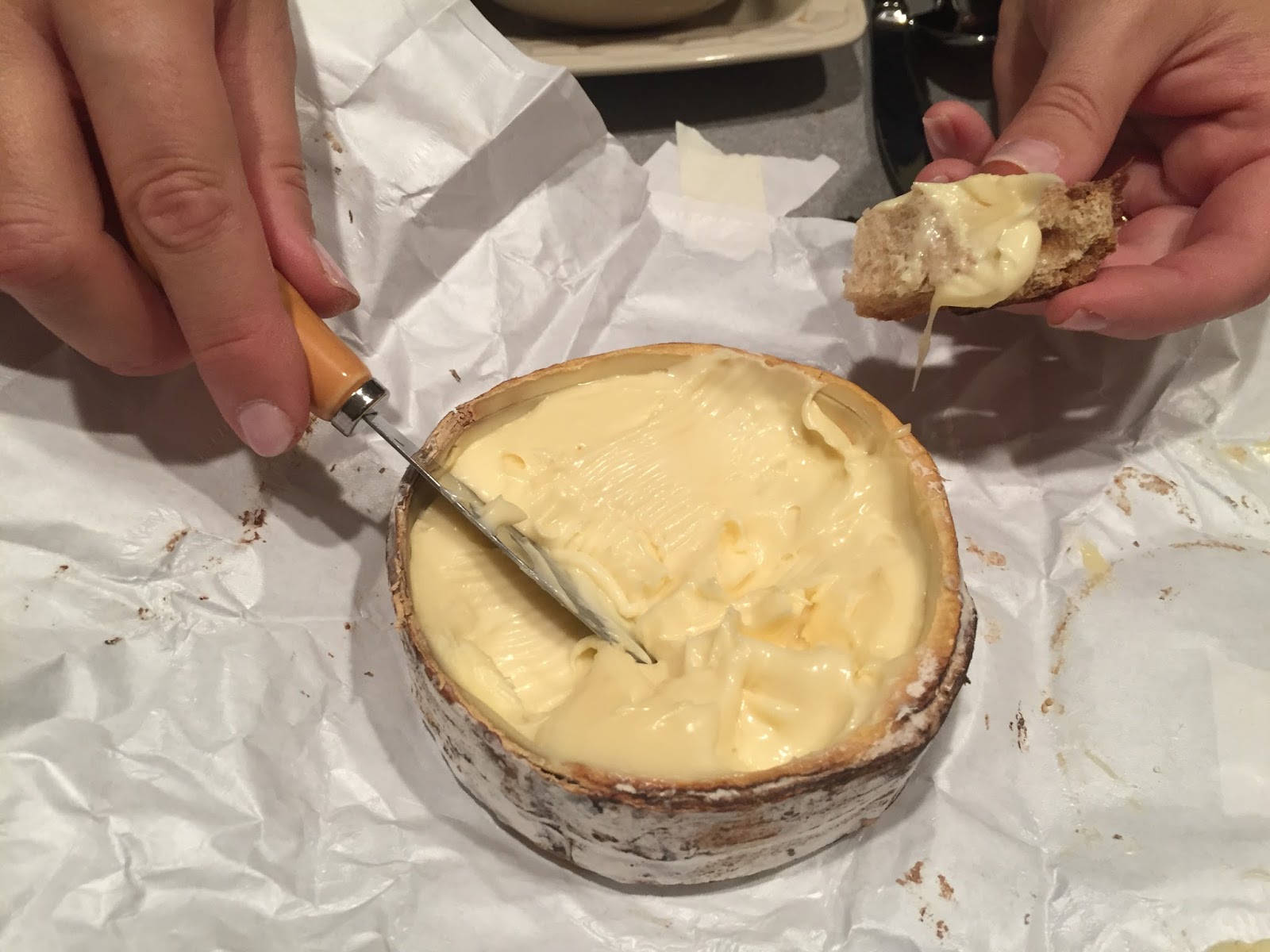
Inspired by his experience of making Mont d’Or in the Jura region of France, Rush Creek Reserve is a serious, all-consuming labor of love. Andy cuts and stirs large curd by hand to protect its soft and delicate nature, and hand ladles curd into forms. It is then flipped, and drains overnight. The next morning, wheels are brined and handwrapped by spruce bark that’s been boiled and soaked in yeast and molds. As a raw milk cheese, Rush Creek is aged 60 days and then immediately shipped to retailers. It’s the type of cheese that, when eaten, is designed to be warmed with the top removed, and enjoyed with a spoon or bit of bread.

In Madison, Rush Creek Reserve is available right now at several outlets, although obviously I’m a bit partial to Metcalfe’s Markets. I even put bows on every wheel we sell at our Hilldale store.

As Andy and Caitlin look to the future, I’m sure they wonder if either of their children will want to be cheesemakers. In any case, Andy is planning on teaching them to play the violin and mandolin, his second great love to cheesemaking. His band, Point Five—a local group of musicians playing traditional, acoustic Americana music—plays numerous gigs in the region. “We’ve got enough instruments in this house that the kids will be able to play whatever they want to,” Caitlin says. “And if they’re lucky,” Andy adds, “I’ll even sing along.”